DESCRIPTION
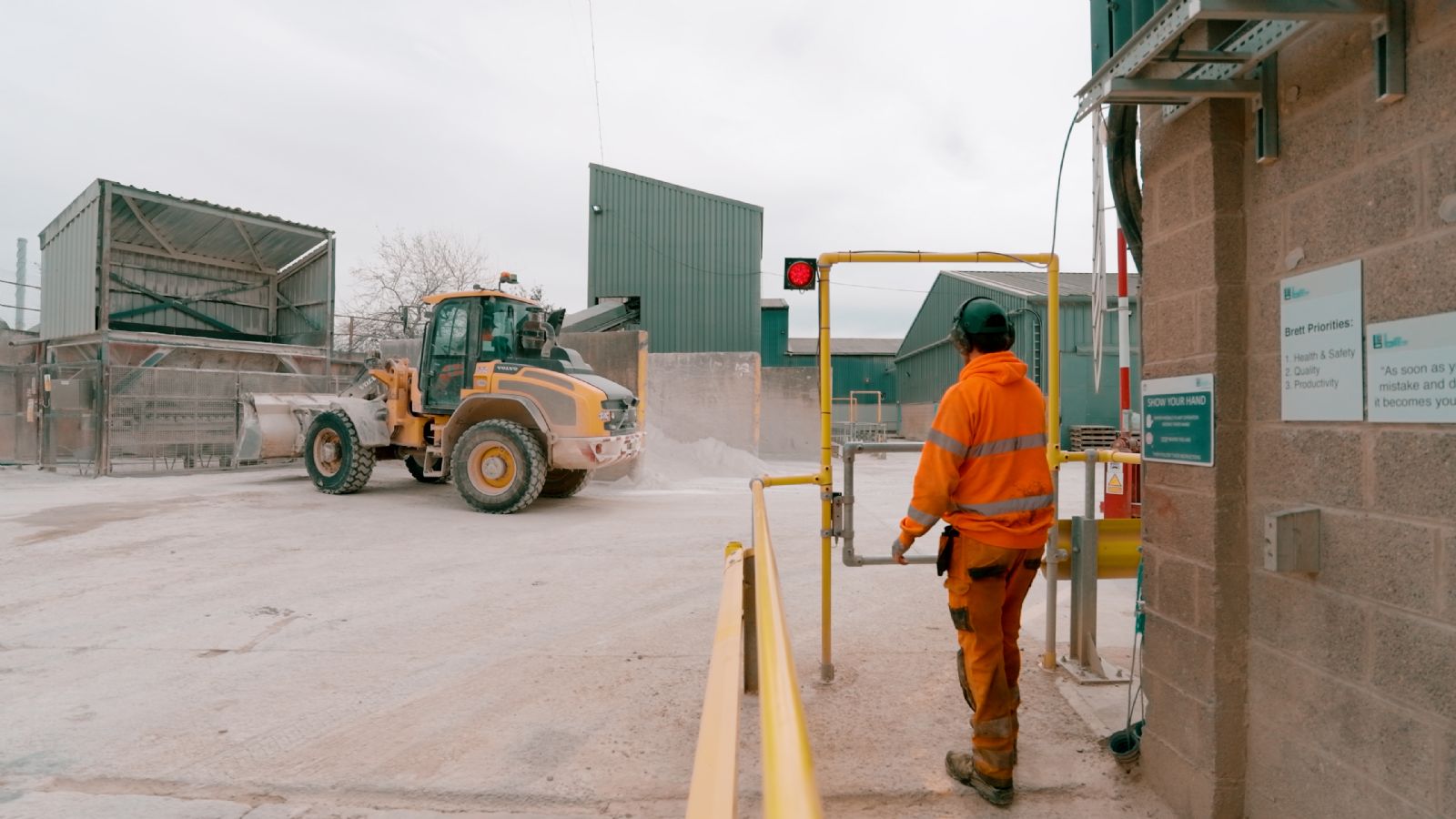
Brett Landscaping’s site at Barrow manufactures concrete block pavers, slabs, and kerbs on an 8-hectare site, with 5 production factories. On this complex site, the pedestrian walkways have been located to minimise interaction between pedestrians and forklifts working in the stocking yards, the area where the most traffic movements occur. However, the site layout does have pedestrian walkways that include crossing points where aggregate lorries reverse to tip into aggregate holding bays and loading shovels are operating feeding hoppers, creating a hazard for pedestrians.
Pedestrians must pass through a swing gate to leave the segregated walkway area and cross the areas where this activity is taking place. The shovel driver is responsible for controlling the tipping exclusion zones, stopping traffic from driving past and alerting pedestrians to stay in the walkway whilst either tipping is in operation or the hoppers are being fed. This was achieved by the shovel driver giving verbal instructions and hand signals.
However, near misses were being reported that related to pedestrians entering the tipping exclusion zone before a lorry had finished tipping its load. Analysis suggested that the problem was primarily associated with contractors, visitors and delivery drivers, who used the walkways to access welfare facilities and different working areas. They were either unfamiliar with or failing to follow the safety rules. Although the tipping rules were explained during induction, some individuals were entering the tipping exclusion zones, and the shovel driver had to stop them.
Please watch the video and review the entry in the 'Sharing good practice guide' for more information about Brett's solution.
BENEFITS
- Reduced potential for workplace transport and pedestrian interface.
- No further near misses being reported in tipping area since the installation.
- Shovel driver has full control of tipping and hopper feeding areas.
- Employees now looking at other areas on-site where pedestrian safety could be improved.
- System has enhanced perception of risk associated with workplace transport.
- Positive feedback from employees and site visitors.
- A safer environment for all.